

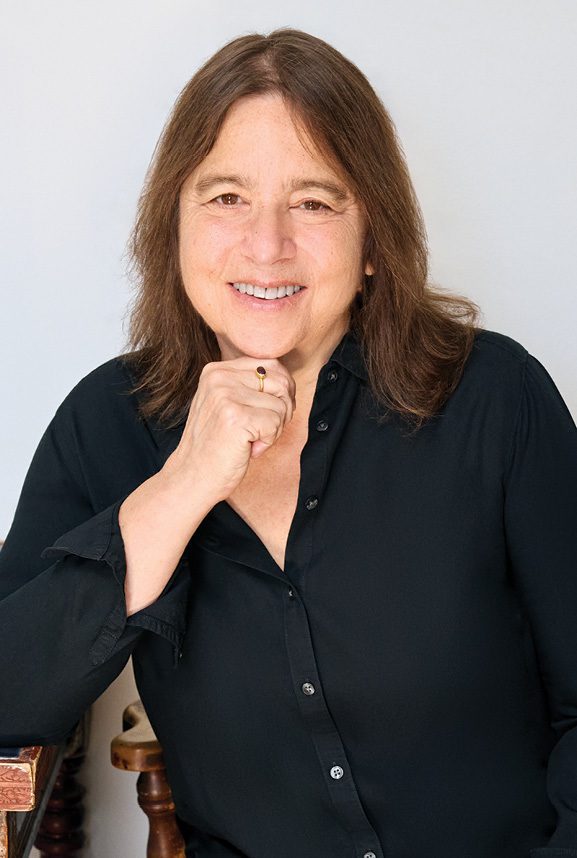
As prolific a writer as Sarah Schulman is—eleven novels, nine works of nonfiction, several plays and scripts—it is her role as a teacher that anchors her new book, The Fantasy and Necessity of Solidarity. She writes about how an open-admission process at CUNY Staten Island, where she taught for many years in the English Department, helped her to develop a skill that has been invaluable to her as an activist: the ability to journey with people at different stages of political consciousness who come from disparate social worlds.
In her new book, Schulman weaves together personal experiences (as activist, author, friend, and teacher), historical examples, and her unique brand of cultural criticism to develop a framework for solidarity, not as a rarefied theoretical concept to be interrogated by academics, but something to be practiced and revised by activists in all movements for justice. At a moment when political discourse is dominated by the shallow engagement of social media—itself the content that fuels the corrupt, fascist oligarchy in which we live—Schulman is making an urgent case for substantive, sustained attention and relationship building in our politics. Successful social justice movements, she argues, allow for diverse participation, simultaneity of action, and, above all, mechanisms for making and learning from mistakes: a very teacherly approach to solidarity.
I spoke with Schulman, who now teaches at Northwestern, about why we need to focus on this fundamental of organizing when everything in our cultural moment incentivizes us to shut ourselves off from each other and our communities.
Nino Testa: What does this book mean by solidarity? And can you talk about the paradox of fantasy and necessity that organizes the book?
Sarah Schulman: To me, solidarity means the recognition that other people are real and that their lives matter. And that sounds basic, but it’s kind of dropped off the agenda of our social relations. While solidarity is something that we must participate in if we want to have any kind of impact on the future, it involves a lot of fantastical thinking about saving the day and being the rescuer and all of that. In order to make solidarity more doable, we need to erase ideas of heroism and perfectionism, and understand it as a flawed process where you make mistakes and you have to keep going and make changes. Now that we’re in the middle of a fascist cataclysm—and we’re not going to get out of it quickly—we need to understand that this is about building infrastructure for the future.
Testa: That line, “making solidarity doable,” appears early in the book. You’ve written both in this book and elsewhere about how you understand theory as being derived from action, and not vice versa. How does this directionality guide your thinking as you theorize solidarity in the book?
Schulman: I come from the ACT UP experience. I wrote a six-hundred-page history of ACT UP [Let the Record Show, 2021]. Because it’s one of the most successful social movements of our time, it’s worth trying to understand why they were so successful. After Jim Hubbard and I interviewed 188 surviving members of ACT UP over eighteen years, I think I do understand some things about how it worked, and for me, the reason it was so successful was that they were focused on being effective. Being effective was the number-one priority, because people had AIDS and they were living against the clock and they couldn’t fuck around.
Some of the ways that we can be effective are by having demands that are winnable, that are reasonable, and that are doable. For example, in today’s landscape, the demand for universities to divest from Israel is a completely winnable demand because it was already won during the South Africa anti-apartheid campaign. In fact, one of the leaders of the Palestinian Boycott, Divestment, Sanctions Movement, Omar Barghouti, was a graduate student at Columbia during that campaign. So we know that institutions are capable of doing it, and that’s why it’s a great demand.
Building a campaign around a doable demand—so that your actions are designed to push your campaign forward, to let people understand through the media that you have a solution to the problem—that is what makes a lot more sense to me than just yelling and screaming.
Sometimes we do need to yell and scream. But having these large everybody-go-to-Washington marches, it takes so much energy and money, and then it’s over, and it hasn’t communicated a winnable demand. That’s why I’m really happy to see that people are much more locally oriented now, and that people are being asked to do actions in their towns, focused on people in power who they know and with demands that they’ve constructed. It just makes much more sense.
Testa: I was just at an ACT UP Pittsburgh action, a die-in at UPMC [the University of Pittsburgh Medical Center], because they cut gender-affirming care for trans kids. It was just so wonderful to see this very specific local demand. People were getting together and talking about other things they could do to support trans people locally.
Schulman: Local actions are so much more functional, right? Because they build relationships with people who live in communities together.
Testa: Your book engages with solidarities across different political movements and eras, but clearly Palestine is the animating cause of the book. I just attended the People’s Conference for Palestine in Detroit, where the theme was “Gaza Is the Compass,” meaning that what we learn from Gaza can teach us everything we need to know about how we resist all of the violent systems that are destroying our planet. What does it mean for you to structure your argument about solidarity around Palestine?
Schulman: I’ve been a friend of Palestine for over sixteen years now, and I’ve learned a lot. But we’re at a moment where every community in this country is under attack. I mean, people who have Alzheimer’s are under attack because the government is taking away money from science research. People who expect to be on social security are under attack.
To have the book be exclusively about Palestine didn’t make sense to me because the things that we need to build that movement are the things that we need to build the larger movements. Those things include allowing for disagreement, having multiple strategies, helping people be effective where they’re at, simultaneity of response. All these things that to me are radical democracy.
Radical democracy means accepting difference with a bottom line because movements that have tried to force people to all agree on one strategy or one analysis have all failed historically and there’s no exception. And now that so many different kinds of people are under attack, to ask people to all agree with each other and have the same approach, it doesn’t make any sense.
So that’s why I’m viewing Palestine as a centerpiece, but I’m also looking historically at movements—not just ACT UP—but movements that have never been historicized before that I think will be interesting for people. And I also look at iconoclastic individuals who are very creative and help us understand what the individual can do and the role of creativity in building solidarity.
Testa: Throughout the book, you focus on the way that social media can close down potential solidarities instead of opening them up, but we also know that social media gives us all sorts of things to help us organize, gives us information and connections. What do you want people who read the book to take away as they consider how to utilize social media in their solidarity work?
Schulman: Part of our crisis right now is loneliness and isolation. Between Covid and the internet, the experience of building group relationships by being in real life with people is something that people really want. I just went on a twenty-city book tour this spring. There are indie bookstores everywhere now because people want more community, and the events are packed with people, standing-room only. People want to be together. They want to talk about ideas together. They want to be in real life. On the other hand, if it wasn’t for Twitter or X, I wouldn’t know what’s going on in Gaza because the media is so terrible—the only American media that I trust is Democracy Now. I just think activism creates community and produces relationships, and relationships help people be more effective. It’s beneficial all the way around.
Testa: You share a scary and sadly familiar story in the book about when you were maliciously, falsely accused of antisemitism, because of your Palestine solidarity work, and had to endure some pretty horrible bureaucratic harassment. These accusations are clearly a way to deter people from speaking out. What are some of the collective responses that we can have to these false accusations of antisemitism?
Schulman: In 2016 I was the faculty advisor for Students for Justice in Palestine at the CUNY, Staten Island, and I was accused of antisemitism by CUNY. I had to get a lawyer from Jewish Voice for Peace and I had a hearing. They had fourteen pages of charges, all of which were absurd. And then I was acquitted. But at the time, the absurdity is what struck me. I didn’t realize it was a dry run for what they were going to be doing a few years later to everybody.
Just a few weeks ago, I was named in a congressional committee interrogation of the former president of Northwestern, my employer, where an anonymous Republican congressman—anonymous because his name is redacted on the transcript, which is also crazy—said to the president, “Do you know Sarah Schulman? She’s the faculty advisor to Jewish Voice for Peace, and she says that no one is being persecuted on this campus because they are Jewish. And don’t you think, President Schill, that a person who disregards antisemitism shouldn’t be a faculty member?”
Obviously saying, “No one is being persecuted on campus because they’re Jewish” is not disregarding antisemitism. People are being persecuted on campuses. They are being arrested. They are being deported. They are being expelled. Some of the students who were expelled from Columbia are Jewish, but that’s not why they were expelled. Maura Finkelstein, tenured professor at Muhlenberg College, was fired even though she had tenure, not because she’s Jewish, but because she opposed the war on Gaza.
What they are really claiming is that the presence of students and faculty who oppose genocide is an anti-Jewish action, which obviously it’s not. Many of us are Jewish. So the whole thing is an Orwellian set of lies designed to confuse people. And it does confuse people. Because the Zionist movement came up with this strategy some years ago of conflating criticizing Israel with antisemitism, which is absurd; however I find that when I go out in person, it’s very easy to break it down.
People who strongly support the Israeli government, whether they’re Jewish Zionists or Christian Zionists, are made uncomfortable when they are confronted by their peers who want the killing and deliberate starvation to end in Gaza. And because they have supremacy ideology about themselves, they think that being uncomfortable is some kind of assault. Now, I already wrote a book about that. It’s called Conflict Is Not Abuse (2016), and it has sold, to date, over seventy thousand copies and has been translated into five languages. So this is a problem that people understand.
The accusations of antisemitism are completely false. I just respond to them the way I respond to everything. I try to have internal coherence and say things that I think are true, because integrity is the only thing we have control over.
Testa: That’s so beautifully said. I love that term “internal coherence,” which appears in the book as well. It made a lot of sense to me. Relatedly: We’ve seen so many absurd examples of Zionists accusing Jewish people of antisemitism. It reminds me of the pinkwashing logics being used against queer people who are in solidarity with Palestinians. Like being told, as I and many other queers have been, “They would throw you off of a roof in Gaza.”
Schulman: Which has never occurred, by the way.
Testa: Which has never occurred and is a disgusting thing to say. You trace the history of queer solidarities with Palestine in a compelling way in the book.
Schulman: I trace it back to Jean Genet, the French gay novelist, who was a great friend of Palestine and an openly gay friend of Palestine and who did a lot of work for them and knew Arafat and wrote an important book about the massacres at Palestinian refugee camps in Lebanon. And, you know, the founders of Jewish Voice for Peace included a lot of gay women. And ACT UP, during the First Gulf War, was chanting, “Fight AIDS, not Arabs.” Then there are groups like Queers Undermining Israeli Terrorism (QUIT!) and Queers Against Israeli Apartheid. These groups have existed for a very long time. People who came out of the Left have often been supportive of Palestine. So there’s actually a long and complex history here.
We also have this phenomenon now of gay fascists who are rising, people like Peter Thiel, Bari Weiss. The head of the fascist party in Germany is a lesbian. These ultra-right-wing gay people amassing enormous power. Whereas our progressive-thinking queer people are now integrated into all of the Left movements in the country and in the world. At the beginning, there was a separate gay and lesbian movement because the Left didn’t want gay people. It wasn’t because gay people wanted to be alone. Now every progressive organization has queer and trans people in leadership, and that’s as it should be.
Testa: I was not prepared for the final chapter of the book, “When Solidarity Fails,” which is a transcript of a panel discussion you were part of with Morgan M. Page in 2016. You discuss the fallout from your delivery of a political sermon at the funeral of your friend Bryn Kelly, who had died by suicide. Your sermon described Kelly’s death in detail and ran counter to the expectations of many young trans people who were at the funeral about what a eulogy should be. Can you talk to me about the decision to do this roundtable on suicidality and collective care in queer
communities?
Schulman: One of the things I’ve been trying to do for some decades now is show in nonfiction books what I’ve done wrong—which is something that I’ve always done in fiction—but to try to model self-criticism and making mistakes, because I think it’s helpful.
I gave a eulogy for my student who had committed suicide. Coming from the ACT UP demonstration generation, I was very much part of the political funeral experience. And I didn’t realize that there were one or two generations after me that had never had that, that there were young queer people who didn’t know anyone who had died. I just had not processed that.
Six or seven hundred people came to this funeral at St. John the Divine. And there were people who, if they had ever been to a funeral, it was for their grandmother. And everyone just said, “She was such a nice person.” And so a lot of people were very upset by this other approach. And I had not internalized the generational differences.
Also there were questions about religion, because I’m not religious. To me, when a person dies, that’s the end. But there were people who felt that Bryn was looking down on us and could hear what I was saying. That contributed to their criticisms. Morgan and I decided to have a [later] public conversation where we both read the eulogies we had delivered, and we had an open discussion with the community.
The roundtable was an experience of talking through difference and misunderstanding and upsetness. Some things that people say in the discussion are great. And some things, to me, don’t make that much sense. It’s just a human conversation in person.
Testa: I was really struck by it. It was clear that you were offering this challenging conversation as a model of how you talk through these perspectives and that it’s actually about the process. Everyone was just so humane and honest with each other in that conversation. In what ways did solidarity fail for you in that experience?
Schulman: It’s complex because I think that we tend to see suicide as a failure of community, and that’s not always the case. And that became clear in the conversation because there were people there who were suicidal and who felt like it wasn’t because of other people. On the other hand, in Bryn’s case, you had a very brilliant person who was very loved, who had all kinds of social deprivation. She was in poverty. She was HIV positive. She was worried about being homeless. Her care was terrible. Her psychiatric care was awful. And so, in this case, we’re seeing a person who really should not be dead now and who is because of lack of social support. And so, in that sense, her suicide was a failure. And we have to grapple with it.
Testa: Thank you for sharing that. To close: What is your hope for people who read the book?
Schulman: I want people to think about being effective, being creative, taking chances, not sticking to orthodoxies. I give a lot of examples of really wild ideas that had an impact. I believe that healing takes place in relationship, and it’s both personal and social. I’m asking people to talk to each other, even if you’re mad at somebody. I hate shunning. It’s really the worst thing. And I just think it creates endless pain and it doesn’t produce anything positive. And it’s better to be uncomfortable and get out on the other side.
We’re all in for a long haul right now, and we need to be productive. Movements need victories, and wasting your time in a cataclysm is not helpful for people. I try to give a lot of examples of ways to move forward together even when we know we can’t fix it right away.
